.co.uk
£ 0.99
Then £ 12.99

Make your mark online with the perfect domain name. Done in minutes!
Great value
Register the perfect domain at a price that fits your budget.
One-click setup
Activate your domain with one click – no technical skills required.
More than 400 TLDs
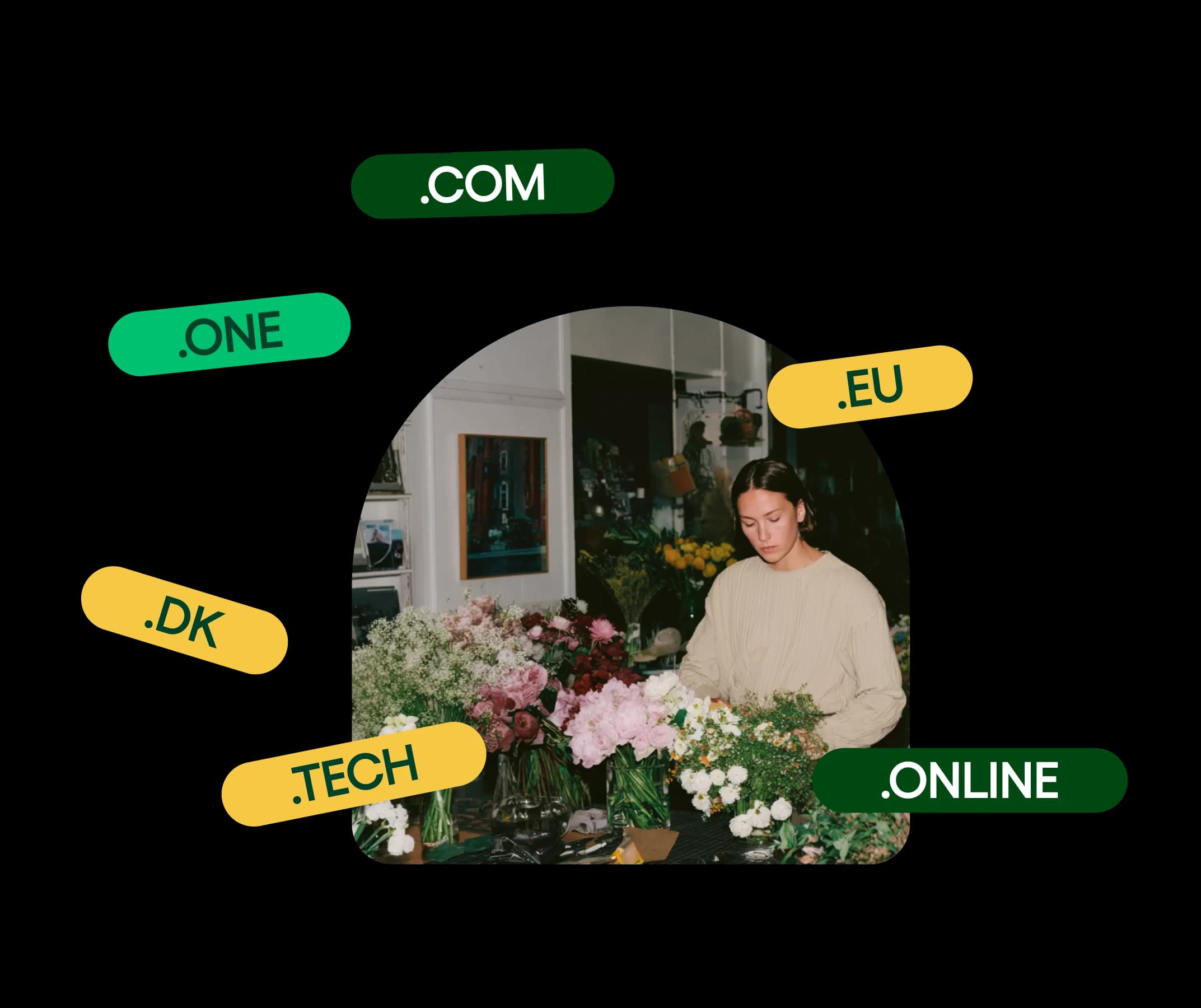
From .com to .co.uk – choose an extension that fits your business.
Unlimited growth
Scale your project with unlimited subdomains for your website.
Explore over 400 top-level domains and get instant inspiration with our AI domain generator. Your new domain name is just a search away.

Find your match from our big selection of classic and trending TLDs, all at great prices.
Global brands. The gold standard for trust.
UK local. Best for targeting British customers.
Tech & infrastructure. A powerful .com alternative.
Non-profits. Building community and trust.
E-commerce. Tells the world you’re open for business.
Innovation. The home for AI and machine learning.
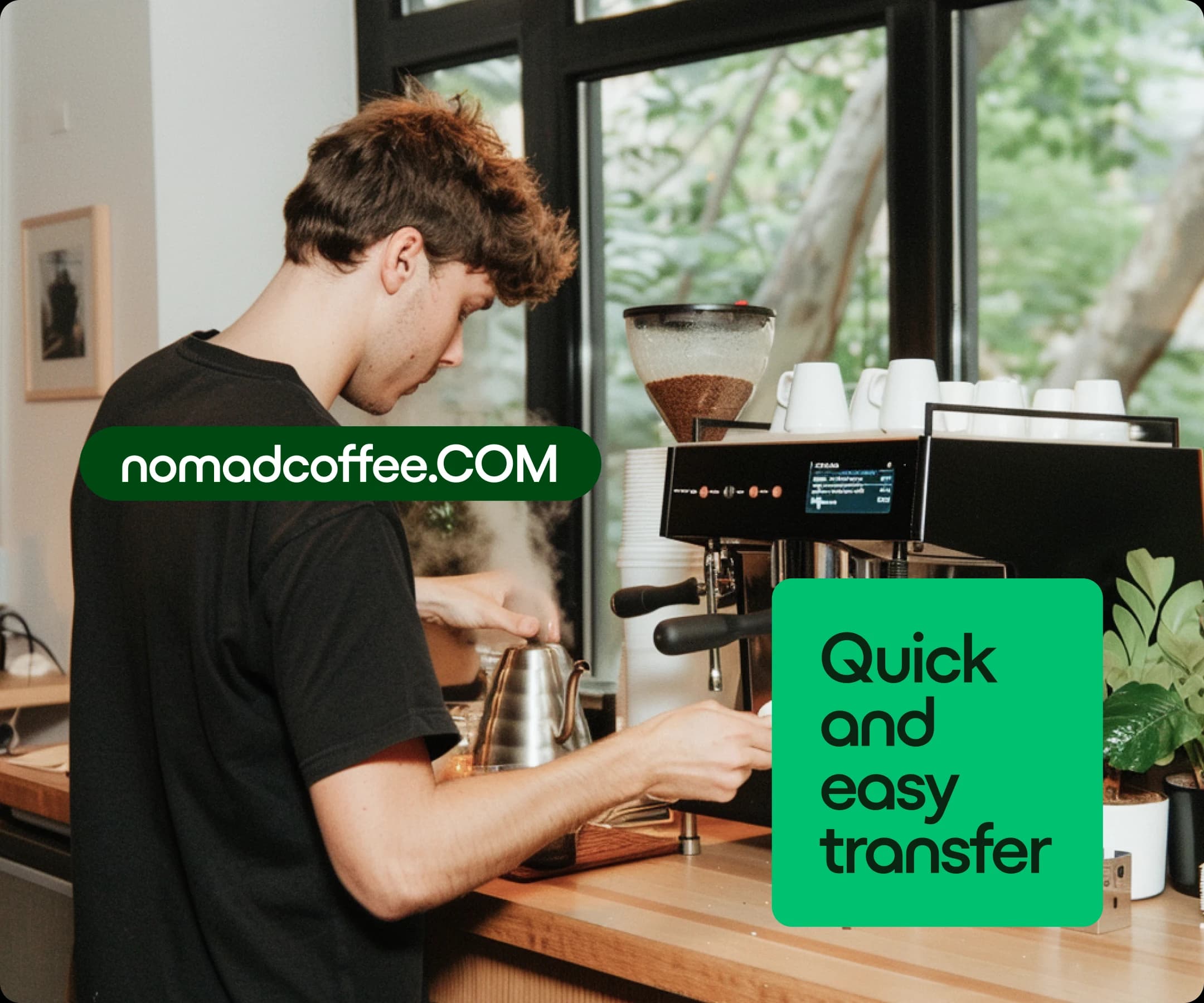
Already have a domain? Move it to one.com and manage everything in one place. The transfer is simple, secure, and guided step by step.
Build your online shop, portfolio, or business website in minutes! Just describe what you need and let Aida create your site, ready to go online and start attracting customers right away.

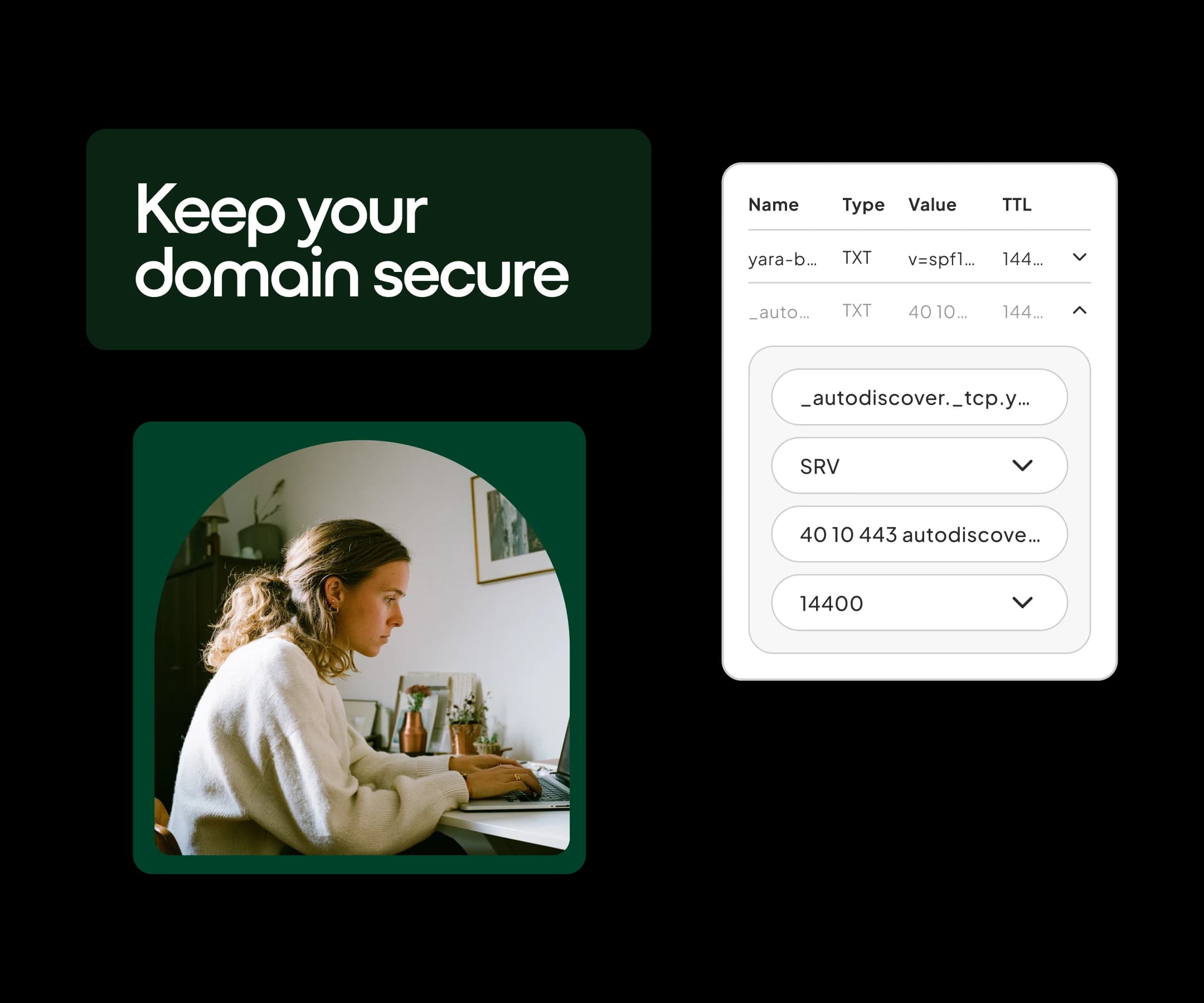
Protect your domain with advanced security features like Domain Lock and full DNS control. These can easily be added to all plans.
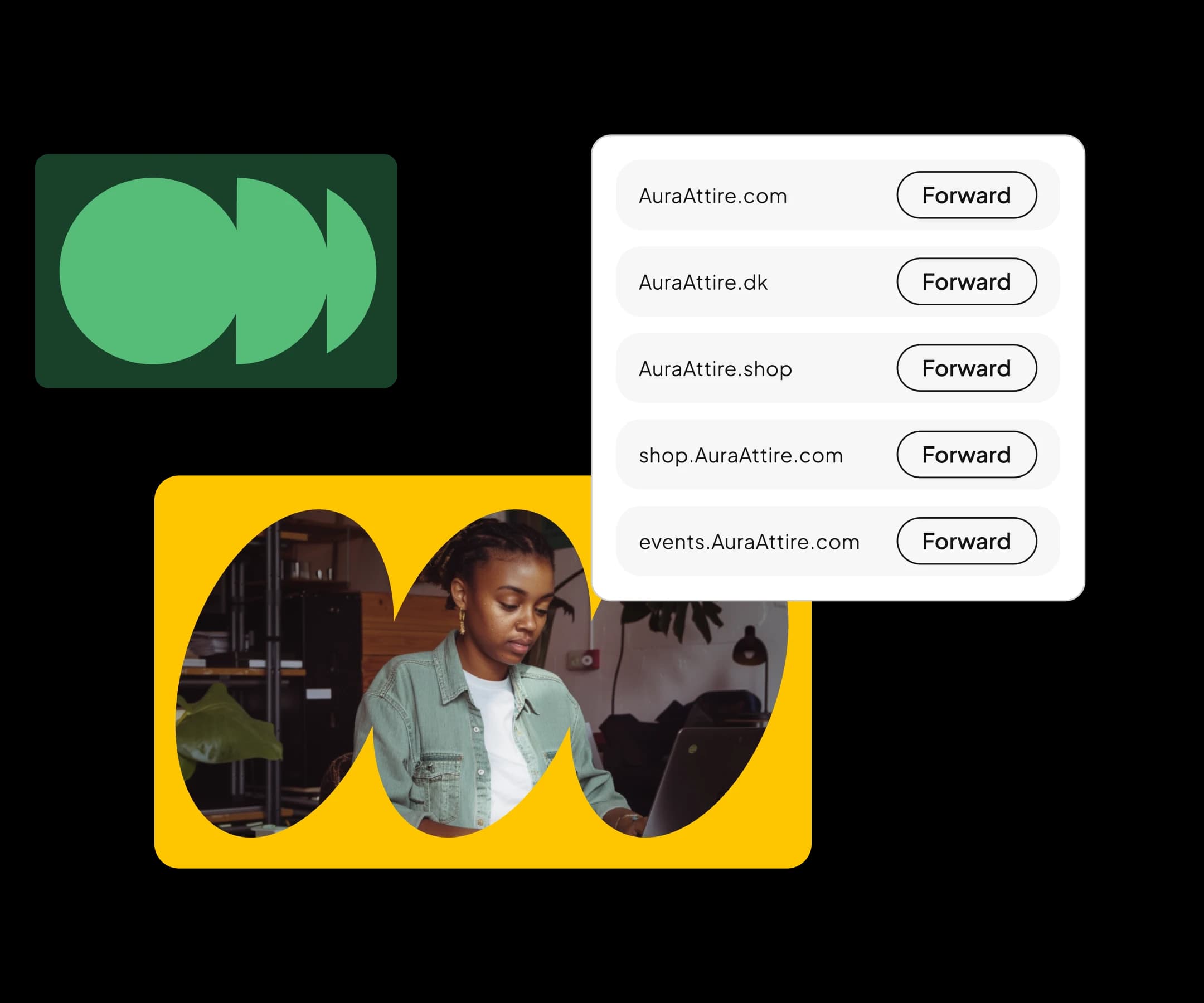
Want to send visitors to your latest project, shop, or another page? Set up custom web forwards and aliases with ease.
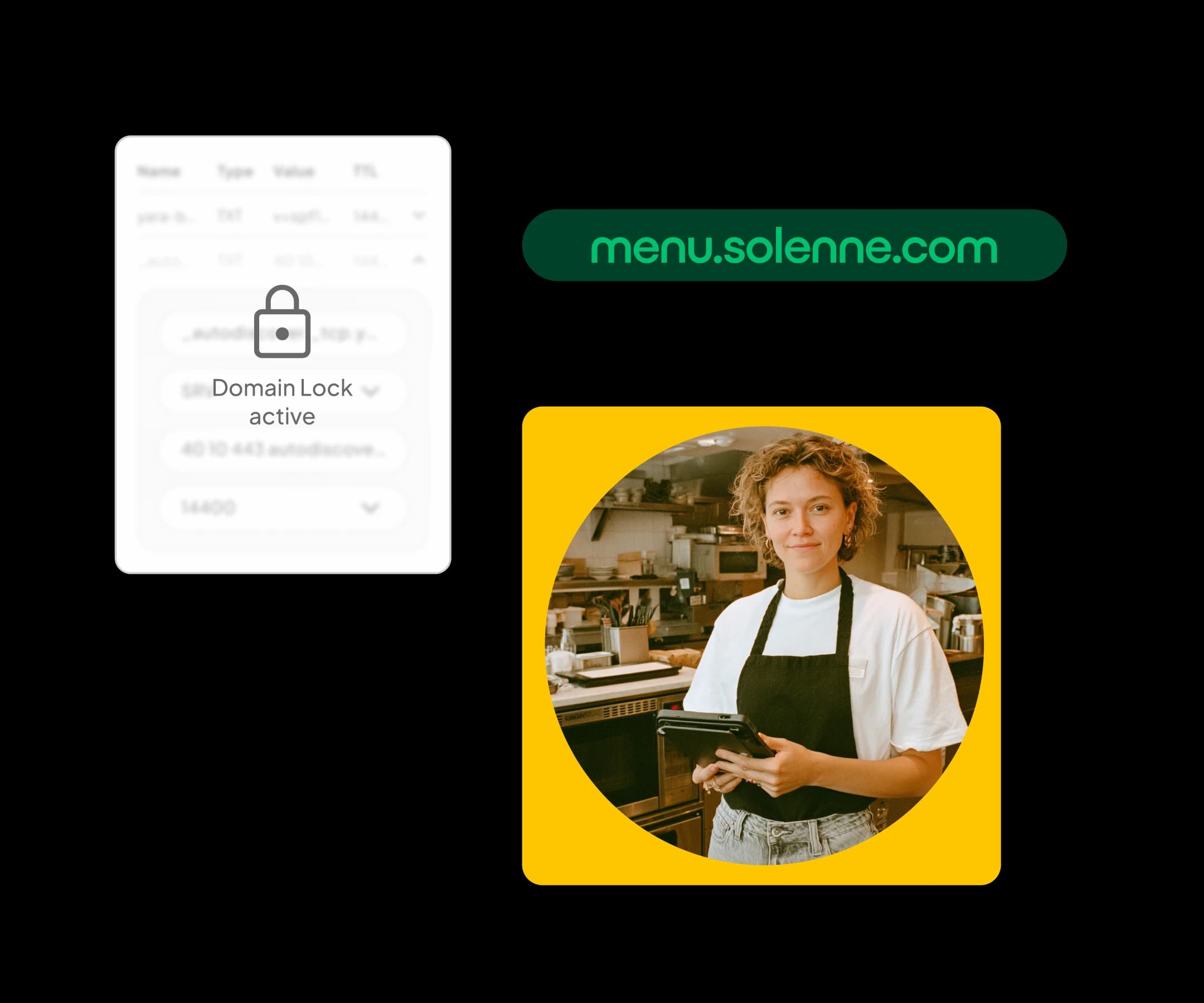
Keep full control of your domain with Domain Lock, which prevents unauthorised changes or transfer attempts.
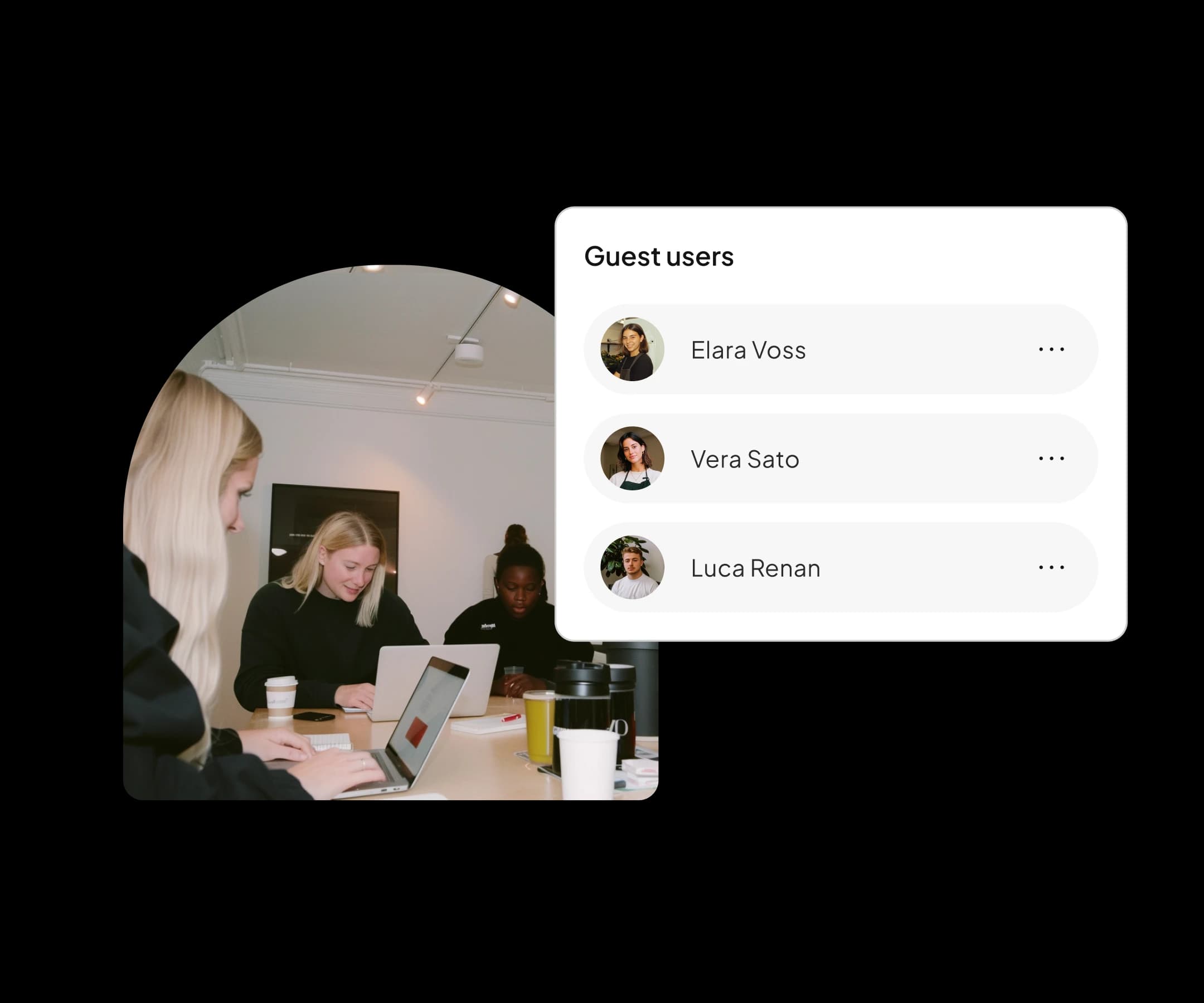
Grant guest users permission to manage specific domain settings, while you stay in full control at all times.
Your domain name is what someone types to find your website or email. If your website is your home, the domain is your address.
Learn more about domains, TLDs and how to choose a good domain name for your project or idea.
Have an issue but like learning on your own? We have a dedicated team creating the best help articles for you.
We are always here to help you. 24/7 – 365 days a year.
Learn more about ecommerce, marketing, business, and much more with in-depth guides, tips & tricks.
Whatever your question, we will respond within 24 hours all year round.
A domain is the unique address people type into a browser to reach your website — for example, one.com. Technically, a domain name is a human-readable label that the Domain Name System (DNS) translates into the numerical IP address of the server hosting your site, so visitors never have to remember strings of numbers. Every domain has two main parts: the name you choose (your brand, business, or project) and the extension after the dot, called a top-level domain or TLD, such as .com, .co.uk, .be, .it or .org. A domain does more than serve your website: it also powers professional email addresses like info@yourbusiness.com and can carry unlimited subdomains, such as shop.yourbusiness.com. Because each domain is globally unique, registering yours secures that exact address for as long as you keep renewing it — nobody else can use it while it's yours.
Buy the domain that matches your brand name, your audience, and your market. Start with the name: it should be short, memorable, and easy to spell — ideally your business name or something very close to it. Then choose the extension. If you serve one country, a country-code TLD such as .uk, .dk, or .de builds local trust and helps you rank in local search results. If your audience is international, .com remains the most recognised choice, while alternatives like .net, .org, .shop, or .online work well when your first choice is taken. Before deciding, check that the name doesn't infringe an existing trademark and that matching social media handles are free. At one.com you can compare availability across more than 400 TLDs in one search, and the AI domain generator suggests brandable alternatives if your preferred name is unavailable.
To buy a domain name, search for it, choose an extension, and complete the checkout — the whole process takes a few minutes. At one.com, type your desired name into the domain checker to see instantly which of the 400+ extensions are available. Add your favourite to the basket, then decide how you want to buy it: as a domain-only purchase, or bundled with a hosting plan, in which case the domain is free for the first year. During checkout you enter your contact details, which are required for the official registration, and pay by card or another supported method. Once payment is confirmed, the domain is registered in your name and appears in your one.com control panel, where you can connect a website, create email addresses, or set up forwarding. Most domains are active within minutes of purchase.
A TLD (top-level domain) is any extension that appears after the dot in a domain name; a ccTLD (country-code top-level domain) is a specific type of TLD assigned to a country or territory. TLDs fall into two main groups. Generic TLDs (gTLDs) such as .com, .net, .org, .shop, and .online are open to anyone and carry no geographic meaning. Country-code TLDs are always two letters — .uk for the United Kingdom, .be for Belgium, .de for Germany — and are managed by national registries, some of which apply residency or eligibility rules. The choice matters for SEO: search engines treat a ccTLD as a strong signal that your website targets that country, which can boost local rankings, while a gTLD lets you target any market. In short, every ccTLD is a TLD, but not every TLD is country-specific.
Choose .co.uk if your customers are in the United Kingdom, and .com if your audience is international. A .co.uk domain signals to both Google and British consumers that your business is local, which helps you rank in UK search results and builds trust with shoppers who prefer buying domestically. A .com is the world's most recognised extension and the safer choice if you sell abroad, plan to expand internationally, or want a single global brand address. The two are not mutually exclusive: many UK businesses register both, use one as the primary website, and forward the other to it — this protects the brand in both markets and costs little. If you can only pick one, let your growth plans decide: local service business, .co.uk; global ambitions, .com. Both are available at one.com with instant setup.
Avoid anything that makes your domain hard to say, spell, or trust. Skip hyphens and numbers: they are easily forgotten, misheard ("is that the digit 4 or f-o-u-r?"), and associated with spam. Avoid intentional misspellings and ambiguous words that people will type incorrectly, sending your traffic to someone else. Keep it short — under 15 characters is a good rule — because long names invite typos and look weak on packaging and business cards. Steer clear of trademarked names and brand names you don't own, which can lead to legal disputes and losing the domain entirely. Be careful with slang or trend-driven words that may date quickly, and read the name as one string to catch unfortunate word combinations. Finally, avoid extensions your audience doesn't recognise if credibility matters: a familiar TLD such as .com or .co.uk usually converts better.
The registrant — the person or organisation listed in the registry's database — holds the legal rights to a domain. Strictly speaking, nobody "owns" a domain outright: registration grants you an exclusive, renewable right to use the name, managed by the registry for that extension under ICANN or national rules. As long as you renew on time, that right is yours indefinitely, and you can sell or transfer it. This is why the registrant details matter so much: make sure the domain is registered in your own name or your company's name, not in the name of a web designer, employee, or agency, or you may struggle to prove control later. The registrar — such as one.com — only administers the registration on your behalf. Keep your contact details accurate and your renewals active; a lapsed domain eventually returns to the open market.
The cost of a domain name depends on the extension you choose (such as .com or .co.uk). Prices typically vary between extensions and may include special offers for the first year.
Plus, you can get selected domains for free when you buy a hosting plan. Check out our domain prices for a full list of rates.
Registering a new domain name means having a registrar record it in your name with the official registry for that extension. In practice you provide your contact details (name, address, email — required under ICANN and registry rules), the registrar submits the registration, and the registry adds the domain to its database with you as registrant. At one.com this happens automatically at checkout: search for an available name, order it, and the registration is filed for you — no forms or technical steps. The domain is typically active within minutes, and DNS, email, and SSL can be configured from the control panel immediately. Registrations run for a year at a time and renew automatically by default, so the name stays yours. Keep your registrant email valid: registries use it to verify ownership.
Not completely — every domain must be registered with accurate contact details — but your personal data does not have to be publicly visible. ICANN and national registries require a real name, address, and email for the registrant; providing false details can void the registration. What has changed is public exposure: since GDPR, personal data of private individuals is hidden or redacted in public WHOIS lookups for most extensions, so your home address is not on display. If someone legitimately needs to reach you — a buyer, or a party with a legal claim — they can use the registrar's domain owner contact form, which relays messages without revealing your email address. At one.com, this privacy handling is built in at no extra cost. So while true anonymity isn't possible, in practice registering a domain today exposes very little personal information publicly.
Yes, you can transfer almost any domain to one.com and manage it alongside your hosting, email, and website in one control panel. The process is straightforward: unlock the domain at your current registrar, request the transfer code (also called an authorisation or EPP code), then order the transfer on one.com's domain transfer page and enter the code. Generic extensions such as .com and .net typically complete within five to seven days, while many country-code extensions — including .be and .uk — transfer within minutes because their registries process changes in real time. Your website and email keep working during the transfer; to guarantee zero downtime, recreate your DNS records at one.com before the switch. Two cautions: don't let the domain expire before transferring, and note that ICANN rules block transfers within 60 days of registration or a previous transfer.
The fastest way to check if a domain is available is to type it into a domain search tool. Enter your desired name in the search bar on one.com's domain page and you'll instantly see whether it's free — not just for one extension, but across more than 400 TLDs at once, so if yourname.com is taken you immediately see alternatives like yourname.co.uk or yourname.shop. If the domain is already registered, a WHOIS lookup shows when the registration expires and, for business registrants, who holds it — useful if you want to make an offer or wait for a possible expiry. Availability changes by the second, and there is no reservation without purchase: if you find the name you want, register it straight away. A domain costs little to secure, and losing the perfect name to someone faster costs far more.
A good domain name is short, memorable, easy to spell, and clearly connected to your brand. Aim for two to three syllables or a maximum of about 15 characters — think of the names you never forget: they're all brief. Say it aloud: if you'd have to spell it out over the phone, simplify it. Including a keyword ("plumber", "bakery") can help visitors instantly understand what you do, but don't force it at the expense of brandability. Choose an extension that fits your market: a ccTLD like .co.uk for local business, .com for international reach, or a descriptive TLD like .shop or .online for a modern touch. Check that matching social media handles are available so your brand stays consistent everywhere. Finally, think five years ahead: avoid names tied to one product or city if you might outgrow them.
Yes, you can buy a domain name without hosting — domains and hosting are separate products, and one.com sells domains on their own. A standalone domain is a common and sensible purchase: secure your brand name before a competitor does, protect a trademark, reserve a name for a future project, or register alternative spellings and extensions that forward to your main site. Even without a hosting plan, your domain is fully manageable from the one.com control panel: edit DNS records, point the domain at an existing website hosted elsewhere, or set up web forwarding to a social media profile or marketplace listing. When you're ready to build, you can add a hosting plan, the Website Builder, or professional email at any time and everything connects automatically. Note that the reverse bundle is also worth knowing: hosting plans include a free domain for the first year.
We had an exceptional occasion which has been solved in an excellent way.
The support I got today from the Hotline was outstanding and solve the problem in an unexpected good way
Great service! Tom handled my cancellation an invoice removal very fast and efficiently. Thank you
Not quite the solution, but an advice in the good direction.
Very nice and helpful support, made my day 100 procent better fast and easy to understand i had a wonderfull time with Marktwin he deserves 5 star rating. Thank u Marktwin
Outstanding support
have been using one.com email for many years. Very good! Today I had a question and the support team helped me within a few minutes.
Teffani was the best customer support agent I've had in +10 years of working with one.com. As always their 24/7 support was great. But this time it wasn't something easy, fun or quick to solve. Together we managed to fix everything as it should be!
Denn was very knowledgeable and fast to sort out my problem! Always great support from one.com
I want to thank Dawn, for the help in the one.com chat, it went very smoothly i got the answers to my questions
I had to verify some details and used the one.com chat, "Lovely" was very helpful and patient and talked me through it step by step. Everything was easy to follow with Lovely's guidance. Thank you +++++
I spoke with the advisor Denn and they was able to remedy my situation very quickly and provide a solution within minutes. Thank you! :)
Eminent support with changing plans, serviced by Lovely! =)
Denn helped me quickly and fixed my issue. I am happy about the service.
Excellent service. Very quick chat response. Krizzia was polite and professional.
Quick Help with an ICANN Domain Lock – Top-Notch Support! My business domain was locked due to a missing ICANN email verification. The problem: The email address on file was outdated and no longer existed. Every automatic activation attempt failed. The support team (many thanks to Israel K.!) immediately sent me the correct form to manually update the registrant information. After submitting the documents, the email address was corrected in the background in a flash, and the domain was reactivated right away. Handled competently, securely, and extremely quickly! 5 stars!
This is the first time a robot has actually been helpful