
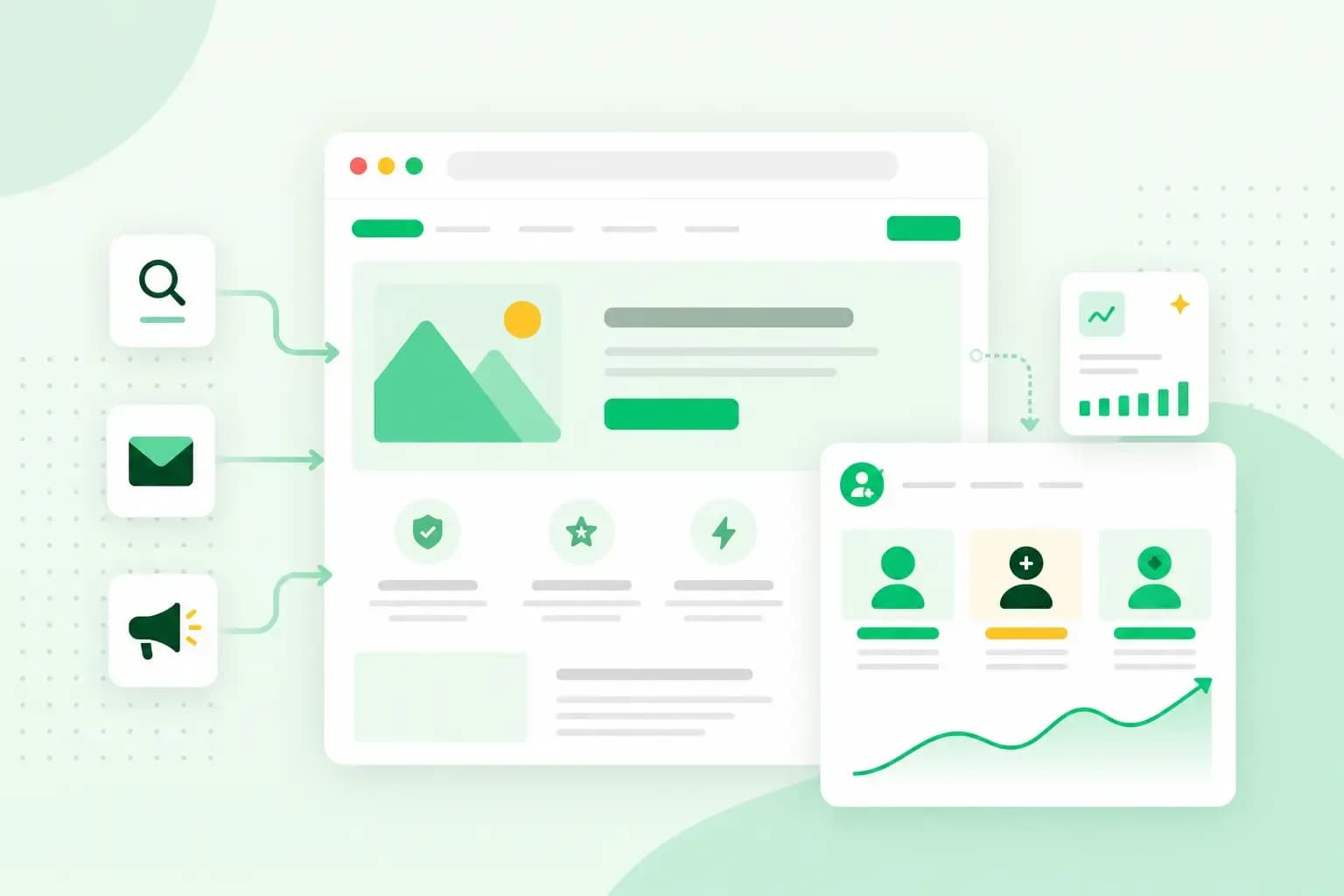
Customer acquisition, or client acquisition, is how a business wins new customers, from the first time someone sees your name to the moment they pay. For a small business, knowing what each new customer costs you shows which of your channels are worth the money.
The stages of customer acquisition
Customer acquisition moves people step by step through the marketing funnel, starting with awareness of your brand and ending with customers who recommend you:
- Strangers are people who don't know your business yet.
- Visitors are people who hear of you, for example through a search or a friend, and visit your website.
- Leads are visitors who show interest and leave their contact details, for example by signing up for your newsletter.
- Customers are leads who buy your product or service.
- Promoters are happy customers who recommend you to others by word of mouth.
Customer acquisition cost and how to calculate it
Customer acquisition cost, or CAC, is what you spend on average to win one new customer, counting both your marketing and your sales. It lets you compare your channels by what each new customer costs you.
To calculate it, add up everything you spent on winning customers over a period. That includes advertising, marketing tools and the time you or your staff spent on sales. For your own time, an hourly rate you set yourself is enough. Then divide that total by the number of new customers you gained in the same period. Count only first-time customers, not returning ones.
For example, if you spent £10,000 on a campaign and gained 100 new customers, your CAC is £100 per customer. If a second campaign brings in 50 customers for £2,000, its CAC is £40, so that campaign wins you customers for less.
What is a good customer acquisition cost?
A good customer acquisition cost is one that's well below what a customer brings in over time. So CAC tells you most when you compare it with customer lifetime value (CLV). CLV is the total revenue you can expect from one customer over your whole relationship with them.
To work out CLV, multiply what an average customer spends with you in a year by the number of years customers usually stay. A customer who spends about £150 a year and stays for about two years has a CLV of around £300. A common rule of thumb is a CLV to CAC ratio of about 3:1. That means a customer brings in around three times what it cost to win them. With the £100 CAC from the first campaign above, a customer worth around £300 gives you a ratio of 3:1. If your CAC comes close to what a customer is worth, each new sale earns you little or nothing.
Because CLV grows the longer customers stay with you, it's worth spending on keeping the customers you have, not only on winning new ones.
Decide which prospects to focus on
Learn who your target audience is before you spend money. If you already have a website, tools such as Google Analytics help you understand the people who visit it. Then weigh each group of prospects, the people who could become your customers, on three questions:
- How likely they are to respond to your offer and take the step you want.
- How much they could spend as customers, such as on extra products, packages or upgrades.
- How much contact they need before they buy, and through which channels, such as phone or email.
Give each group a low, medium or high on each question, using what you know from past sales, customer enquiries and your website data. Put your budget first into the groups that score high on response and spending and need the least contact.
Customer acquisition strategies
A customer acquisition strategy is your plan for the channels you'll use to acquire new customers and what you'll spend on each.
A website people can find
Make your website the place your other channels send people to. It should say clearly what you offer, show your prices or how to get a quote, and make it easy to get in touch or buy. If you don't have one yet, you can create a website without any coding.
SEO, short for search engine optimisation, helps people find your website when they search for what you sell. Someone searching for a plumber in their area is already looking to buy. Ranking for those searches brings you visitors who are close to a decision.
Describe your business in a short chat, and Aida AI Website Builder generates a website with pages, content and images that you can edit before you publish.
Build my websiteContent and email marketing
Content marketing means publishing useful material, such as guides, videos or posts, that answers your customers' questions. It brings people to your website while they're still looking for answers, and shows them you know your subject before they buy.
Once someone has become a lead and left you their contact details, email keeps you in touch. Marketing emails with useful tips or offers remind them of you until they're ready to buy. Send them only to people who have signed up to hear from you.
Social media and giveaways
On social media, regular posts that are useful or fun help you build a following. Post on a schedule you can keep up.
A giveaway can speed this up. Run a competition on your social media account and give away one of your products. Entrants spread the word about your brand. If you ask for their contact details, they also become leads you can follow up. Set clear rules, and ask for permission before you add anyone to your mailing list.
Influencers
With influencer marketing, you partner with people who have a following, so they show your business to their audience. Pick someone whose followers match your customers, rather than the person with the most followers.
Referral programmes
A referral programme rewards customers who bring in a friend, for example with a discount or a credit for both of them. Keep the reward easy to claim, and mention it after a customer has had a good experience.
Loyalty programmes
A customer loyalty programme rewards people for coming back, with points, discounts or perks. Mention it where new customers decide, such as on your website, so it gives them a reason to choose you.
Reviews and testimonials
Ask your customers to leave a review after they've bought from you. Customer reviews and testimonials on your website show new visitors that real people bought from you and were satisfied. Shown where visitors decide, such as next to your products, they help you build trust, since people are more likely to buy once they've read reviews. Never write or buy fake reviews. If you publish reviews, UK consumer law requires you to take reasonable and proportionate steps to stop fake reviews from being published. Those steps also cover reviews from people who got something in return, such as a discount, without saying so, and false or misleading review information. The same steps apply to removing any that get through.
Paid advertising
With paid advertising, you pay to show your ads to people who don't know you yet. With Google Ads, for example, your ads can appear in Google's search results. With many ads you pay for each click, so this is the channel where tracking your CAC matters most. Start with a small budget, and check what each new customer costs before you spend more.
Which customer acquisition channels should you start with?
Start with a website people can find and one channel you can keep up, such as email or social media. Pick that channel from where your customers already look. SEO is slow to pay off, and Google notes that some changes can take several months to show in its results. Paid ads can bring visitors within days, since Google reviews most ads within one working day. Paused ads cost you nothing, and you can resume them whenever you like. If you need customers this month, add a small paid campaign while the slower channels grow.
Track the acquisition cost of each channel. To see which channel a new customer came from, ask them how they found you. Move more of your budget to the ones that win customers for well below what they're worth to you.
Pick your first channel, then work out its CAC next to what those customers are worth. To give every channel a page that turns visitors into customers, build your website with Aida AI Website Builder.
Recommended reading
 Online MarketingOct 19, 2026
15 ideas for Black Friday marketing
Make the most of Black Friday with 15 marketing ideas to attract customers and boost sales. Discover ways to promote your offers, reach more shoppers and make your campaign stand out. Online MarketingDec 30, 2025
AI SEO: how to use AI for search engine optimisation
A basic guide to AI in SEO – let's look at how artificial intelligence can help you speed up your SEO tasks. Online MarketingDec 30, 2025
AI search optimisation: how to get your website into AI answers
A basic guide to AI in SEO – let's look at how artificial intelligence can help you speed up your SEO tasks.