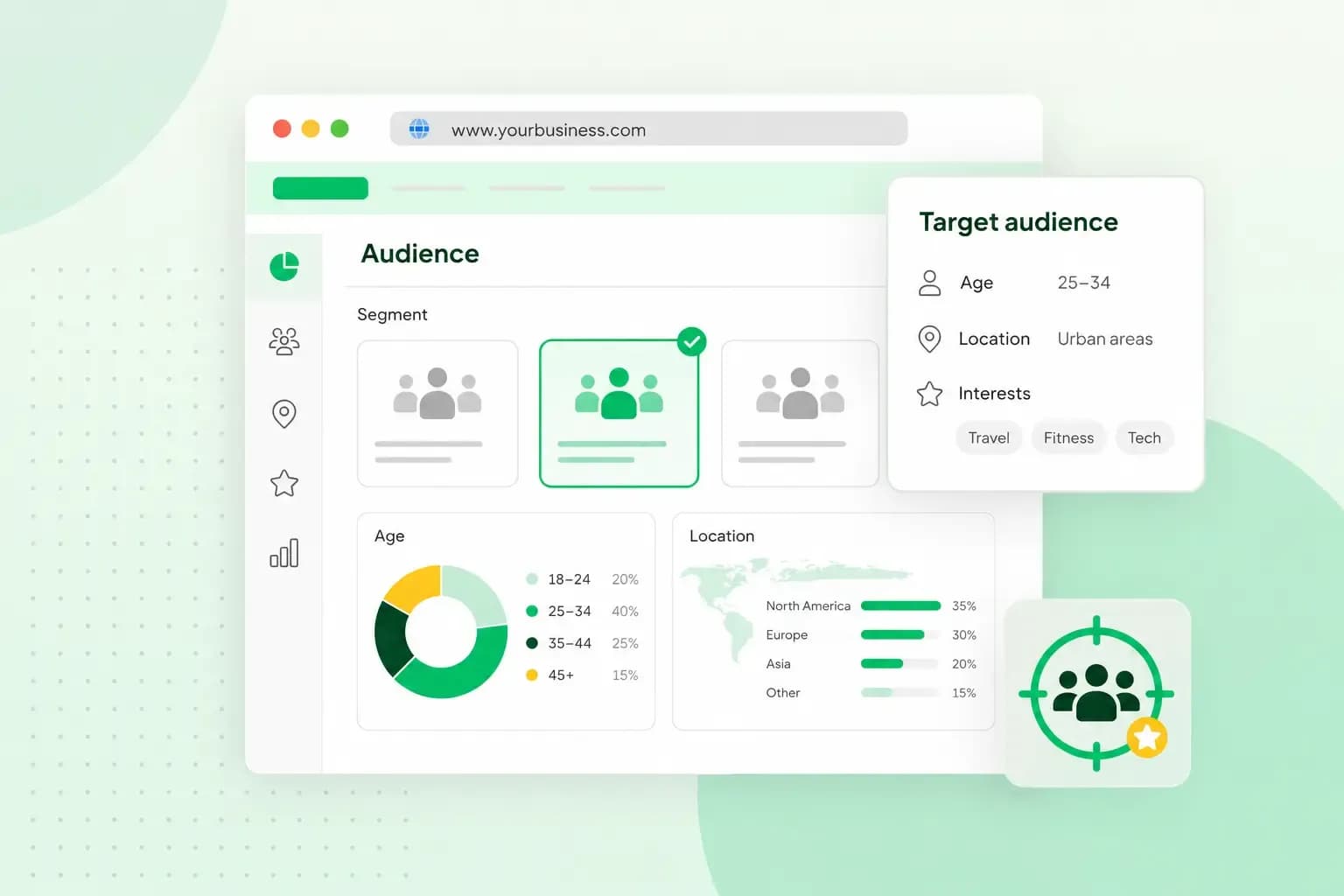
In marketing, a target audience is the group of people you want to sell your goods or services to. You describe them by what they have in common, such as their age, where they live, what they care about and how they shop. If you sell knitted jumpers from your shop in Leeds and online at hollinknitwear.co.uk, your target audience might be people in the colder parts of the UK. They want jumpers that are warm and well made.
Your business can have more than one target audience. Local companies that want jumpers with their logo on could be a second one for your shop, with needs of their own.
Why is a target audience important?
A target audience tells you who your marketing is for, so you stop trying to please everyone. When you know who buys from you and why, you can choose the words, pictures and offers that speak to them in a way they recognise.
Knowing your audience also decides where your time and money go. Every hour and every pound you spend on people who would never buy a wool jumper is one you could have spent on people who might.
It shows you what to put first, too. If your best customers care about British wool, that's the range to show on your homepage and in your newsletter.
How to segment a target audience
Target audience segmentation means dividing your customers into smaller groups who share something that affects what they buy. Your customers don't all want the same thing, so one message rarely works for all of them. Each group, or segment, can then get a message that fits it.
There are a few common ways to segment, and you can combine them. For a small shop, who your customers are, where they live and what they buy is usually enough to start with. One of them, firmographic segmentation, only applies if you sell to other businesses.
You don't need to buy data to start. Your sales records, your website statistics and the results of your email campaigns already tell you a lot about who buys from you.
Demographic segmentation
Demographic segmentation groups people by facts about who they are. For your shop, the useful ones could be:
- Age: a 25-year-old and a 65-year-old rarely buy the same jumper for the same reason.
- Gender: men and women often look for different cuts and sizes, even in the same style of jumper.
- Income: it affects whether your premium range or your basics sell best.
- Occupation: people who work outdoors care more about warmth than about this season's colour.
- Family situation: parents may want children's sizes in the same style as their own.
Demographic data is a good place to start. Google Analytics can show you some of the demographics of your target audience. It shows where your visitors are and, once you turn on Google signals, the age and gender of those who agree to share that data. When only a few visitors are counted, it may hold these figures back to protect their privacy.
Geographic segmentation
Geographic segmentation groups people by where they live, from the country down to the town. Where people live changes what they need. You could check your orders to see which towns buy your thickest jumpers and which lean towards lighter knits.
Location matters for the shop itself too. If your visitors live in and around Leeds, a stall at a local Christmas market may reach them better than a national campaign.
Psychographic segmentation
Psychographic segmentation groups people by why they buy: their interests, values, lifestyle and opinions. You learn about it from reviews, emails and conversations in your shop.
Some of your customers choose your jumpers because the wool comes from a British mill and they want clothes that last for years. Others want this season's colours and follow fashion accounts on social media. The first group wants to read about the mill and the yarn, while the second wants to see the jumper being worn. Once you know which group you're talking to, you know which story to tell.
Behavioural segmentation
Behavioural segmentation groups people by what they do: how they shop, what they buy, how often they come back and where they follow you. It uses data you often already have, such as orders and newsletter clicks, to split your customers into groups like these:
- First-time visitors have found you but never bought. They want to see why your jumpers are worth the price.
- Repeat customers get your newsletter and like hearing about new colours first.
- Winter buyers only order in the colder months. Your marketing to them can start before the first cold snap.
- Gift buyers shop in December and care most about whether the parcel arrives in time.
Where people are in the customer journey is a kind of behaviour too. Someone who has just heard of your shop needs different information from someone who is comparing your jumpers with another brand's.
Firmographic segmentation for B2B
If you sell to other businesses, you segment companies rather than people. This is called firmographic segmentation, or B2B segmentation, and it groups companies by things like their size, location and revenue. When an accountancy firm in Leeds orders twenty jumpers with its logo, the buyer and the reasons are very different from a single shopper's. When a business buyer in this segment asks for a quote by email, it's worth answering from a professional email address on your own domain, which carries your brand name and makes your business look more professional.
A target audience example: putting the segments together
A useful target audience combines a few segments into a description you can picture. For hollinknitwear.co.uk, the main one could read like this: women and men aged 35 to 60 in the north of England and Scotland, with a good income. They spend their weekends outdoors, care about British-made products and buy one or two quality jumpers each winter.
With that description, you'd photograph the jumpers on a walk in the Dales rather than in a studio. You'd write about the mill and how long the wool lasts, and send your winter newsletter in early October.
A second, smaller audience could be local companies in and around Leeds that want branded knitwear for their staff or clients, ordered once or twice a year. Write each audience down like this. A short target audience profile gives everyone who works on your marketing the same picture.
How specific should your target audience be?
Specific enough that your message hits the mark, but large enough to be worth a campaign of its own. "Everyone who feels the cold" is too broad to say anything useful to. "Retired teachers in Harrogate who knit their own socks" is so narrow that you'd need dozens of groups like it to reach enough buyers, and more campaigns than you have time for.
Work with a primary audience and a few secondary ones. The primary audience is the group most of your sales come from, and it gets most of your attention. A secondary audience, like the companies ordering branded jumpers, still matters but gets a smaller share of your marketing.
Your audiences also change over time. Tastes, prices and the way people shop move on. Look at your sales and website statistics every few months, and adjust the groups when the picture changes.
Putting your target audience to work on your website
Your website is often the first place your target audience meets your business, so it's where knowing them pays off most. Once you know who they are, you can shape the site around them in five ways:
- Put what they look for first. If your buyers care about the wool, say where it comes from on the homepage of
hollinknitwear.co.uk, not on a page buried deep in the site. - Match the design and the words to them. Photos, colours and tone should suit the people you sell to.
- Write about their questions. Starting a blog about caring for wool or choosing the right size answers what your audience asks, and Google says its ranking systems aim to show helpful content made for people, so posts like these can also help to strengthen your SEO.
- Organise your shop around them. In your online shop, you could sort your categories by what each group looks for, such as "Walking and outdoors" or "Gifts", and let your product descriptions speak to what that group cares about.
- Make comparing quick. Visitors who come back to compare before they buy should find sizes, care instructions and delivery times quickly, which is what a good user experience gives them.
If your current website doesn't speak to these people yet, start with the homepage and the pages they visit most. If the old site is hard to change, it can be simpler to build a new one around them. With our Aida AI Website Builder, you can change your pages whenever your business or your audience changes.
Build a website for your business without coding or design experience.
Build my websiteOnce your website is live, our workshop on how to reach your target audience shows you how to reach those people with content made for them on the channels they use.
Other questions about your target audience
What is the difference between a target market and a target audience?
A target market is the wider group of potential customers for what you sell. Your target audience is the part of it your marketing speaks to. For your shop, the target market might be everyone in the UK who buys knitwear, and the target audience the outdoor-loving buyers described above.
Is a target audience the same as a buyer persona?
No. A target audience is a whole group of people. A buyer persona is one imagined customer who stands for that group, with a name, a job and habits of their own. Define the audience first, then write a buyer persona for it.
How do you decide your target audience?
Start with the customers you already have: see who buys the most and who comes back, and write down what they have in common. If you're just starting out, look at who buys from businesses like yours, talk to a few people who might buy from you and check your guess against your first sales. Our guide on how to find the audience that fits your business takes you through it step by step.
Recommended reading
 Online MarketingOct 19, 2026
15 ideas for Black Friday marketing
Make the most of Black Friday with 15 marketing ideas to attract customers and boost sales. Discover ways to promote your offers, reach more shoppers and make your campaign stand out. Online MarketingDec 30, 2025
AI SEO: how to use AI for search engine optimisation
A basic guide to AI in SEO – let's look at how artificial intelligence can help you speed up your SEO tasks. Online MarketingDec 30, 2025
AI search optimisation: how to get your website into AI answers
A basic guide to AI in SEO – let's look at how artificial intelligence can help you speed up your SEO tasks.