
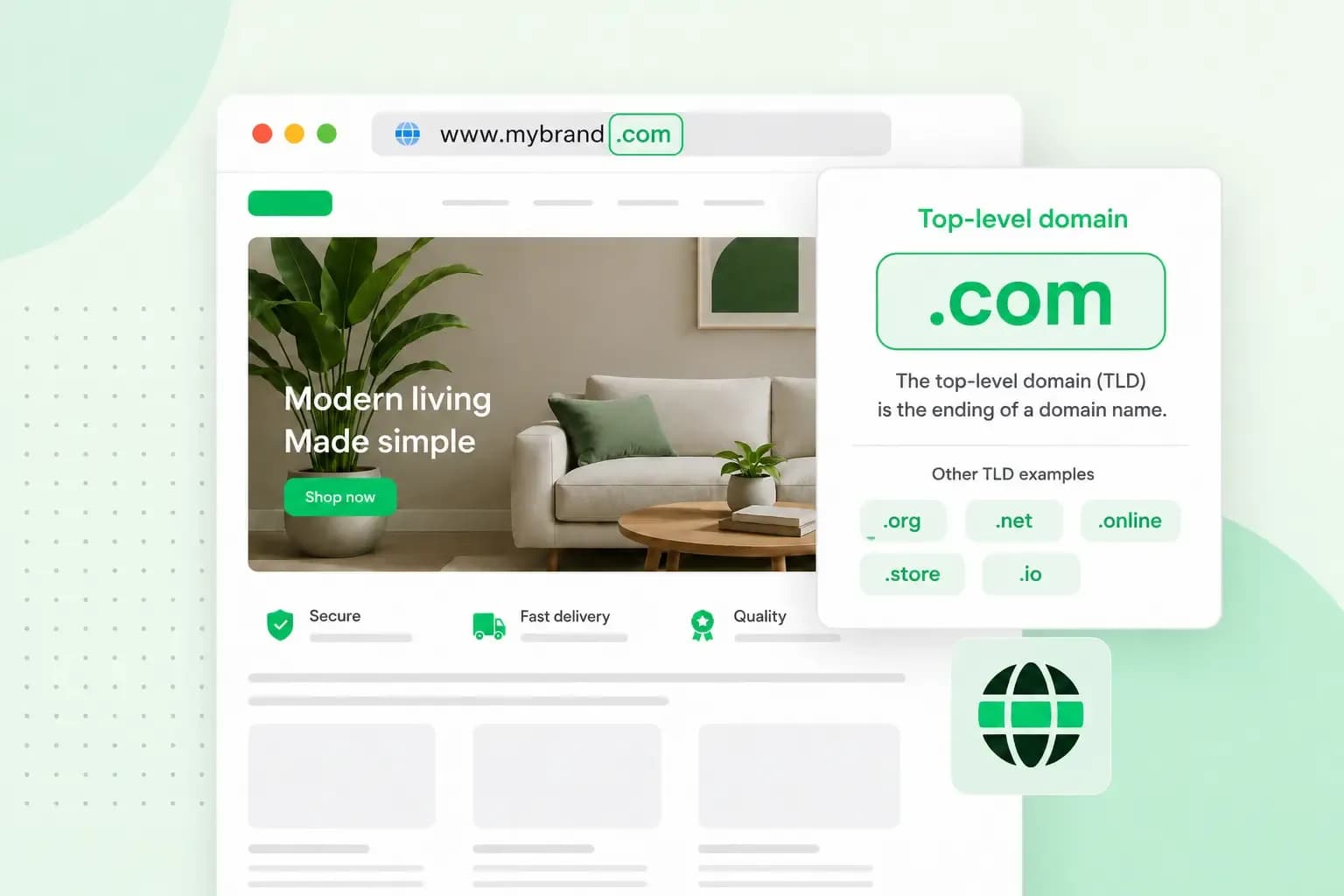
A top-level domain (TLD) is the last part of a domain name, after the final dot, such as .uk, .com or .org. People also call it the domain extension, though an extension you register can be longer, such as .co.uk. You pick it when you register a domain, and it becomes part of the address your customers type. It can also tell visitors which country or kind of organisation a website belongs to.
Where the TLD sits in a domain name
To find the top-level domain in a web address (URL), read the domain from right to left, from the most general part to the most specific. The address of a bike repair shop, www.spokeandmendcycles.co.uk, has three parts:
- The ending .co.uk is the domain extension that goes with the name. The top-level domain is the last part, .uk, and .co.uk is one of the extensions under it, like .org.uk and .me.uk.
- spokeandmendcycles is the shop's own name, the part you choose yourself.
- www is a subdomain, a name in front of your domain that can give part of a site its own address.
The name and its ending together make the domain name, spokeandmendcycles.co.uk. When you choose and register a domain, you can treat .co.uk like any other extension, such as .com.
What are the different types of TLD?
TLDs come in different types, and each type tells you something about who a website is for or who may register a domain with it.
Country code top-level domains (ccTLD)
A country code top-level domain (ccTLD) is a two-letter ending for a country or territory, such as .uk for the United Kingdom or .de for Germany. There are over 250 of them. Some countries restrict who can use their ccTLD. So check the rules before you register an ending for another country.
Generic top-level domains (gTLD)
A generic top-level domain (gTLD) isn't tied to a country. ICANN, the Internet Corporation for Assigned Names and Numbers, counts every TLD that doesn't stand for a country or territory as generic. Examples are .com, .org and .net. Since October 2013, ICANN's New gTLD Program has added hundreds of new top-level domains, such as .shop and .online. So there's often an ending that says what a business does.
Sponsored top-level domains (sTLD)
A sponsored top-level domain (sTLD) is a generic TLD with a sponsor. The sponsor is an organisation that represents the community the TLD is for, and it sets many of the TLD's rules, such as who may register. A well-known example is .gov. The US agency that manages it checks every request, and only US government organisations can register a .gov domain.
Who manages top-level domains?
Each TLD is run by one organisation, its registry, which is in charge of every domain under that ending. Verisign runs .com, for example, and Nominet runs .uk. An affiliate of ICANN runs IANA, the Internet Assigned Numbers Authority, which assigns each TLD its registry. IANA also keeps the root zone database, the official list of every top-level domain and who manages it. The top-level domains it lists form the root zone, the top level of the Domain Name System (DNS).
You don't deal with these organisations yourself. You register a domain through a registrar, a company like us that registers it with the registry for you and lets you manage it. Here's more on what a domain registrar does.
What your TLD tells visitors and search engines
A country code tells visitors which country your website is meant for. Search engines read it too: Google describes ccTLDs as a strong signal that a website is intended for a certain country. A generic TLD such as .com isn't linked to a location, so it fits a website for customers anywhere.
Google treats some ccTLDs as generic, because people use them that way. Its list includes .io, .ai, .me and .tv, so a website on one of those endings isn't tied to one country.
For a UK business like the bike repair shop, a .co.uk domain is usually the best first choice, because it's an address UK customers know and recognise. The shorter .uk is designed for both businesses and individuals, and as a UK country code it points visitors to the UK in the same way. It's a good alternative if your name is already taken as a .co.uk. If you sell abroad, register the .com domain as well and point it to the same website. Our guide to choosing a domain extension goes through the options in more detail.
How to get a domain on the TLD you want
We offer more than 400 TLDs, from .co.uk and .com to newer endings like .shop. Registering a domain takes the same four steps, whichever ending you choose.
- Search for the domain name you want and check that it is available on the ending you picked.
- Choose an available domain name that fits your business or website.
- Enter your details and register the domain for the period you choose.
- Connect the domain to your hosting or website so visitors can find your site.
Your new domain is usually ready within minutes after your order is activated, and in some cases it takes up to 24 hours.
You register a domain for a set period, usually a year at a time, because no domain can be registered permanently. Renew it before it expires and you keep the name.
Questions about top-level domains
What decides the price of a domain?
Mostly the TLD you choose. With us, the most common TLDs are usually the cheapest, and some less common TLDs cost more. Some names are also classed as premium domains, often short, generic or highly sought-after ones, and these cost more than a standard registration. When you compare prices, ours included, check the renewal price as well as the first-year price.
Can you create your own top-level domain?
Not as a quick step for your website. New generic top-level domains come through ICANN's New gTLD Program, which takes applications in rounds, and every applicant has to use an evaluated registry service provider, a company that has passed ICANN's checks, to run the TLD. The application window of the latest round ran from 30 April to 12 August 2026. For your own website, a domain with an existing TLD is the practical route.
Once you know which ending fits your business, register your domain before someone else takes the name.
Recommended reading
 Domain2 Oct 2026
What is a .si domain?
 Domain9 Sept 2026
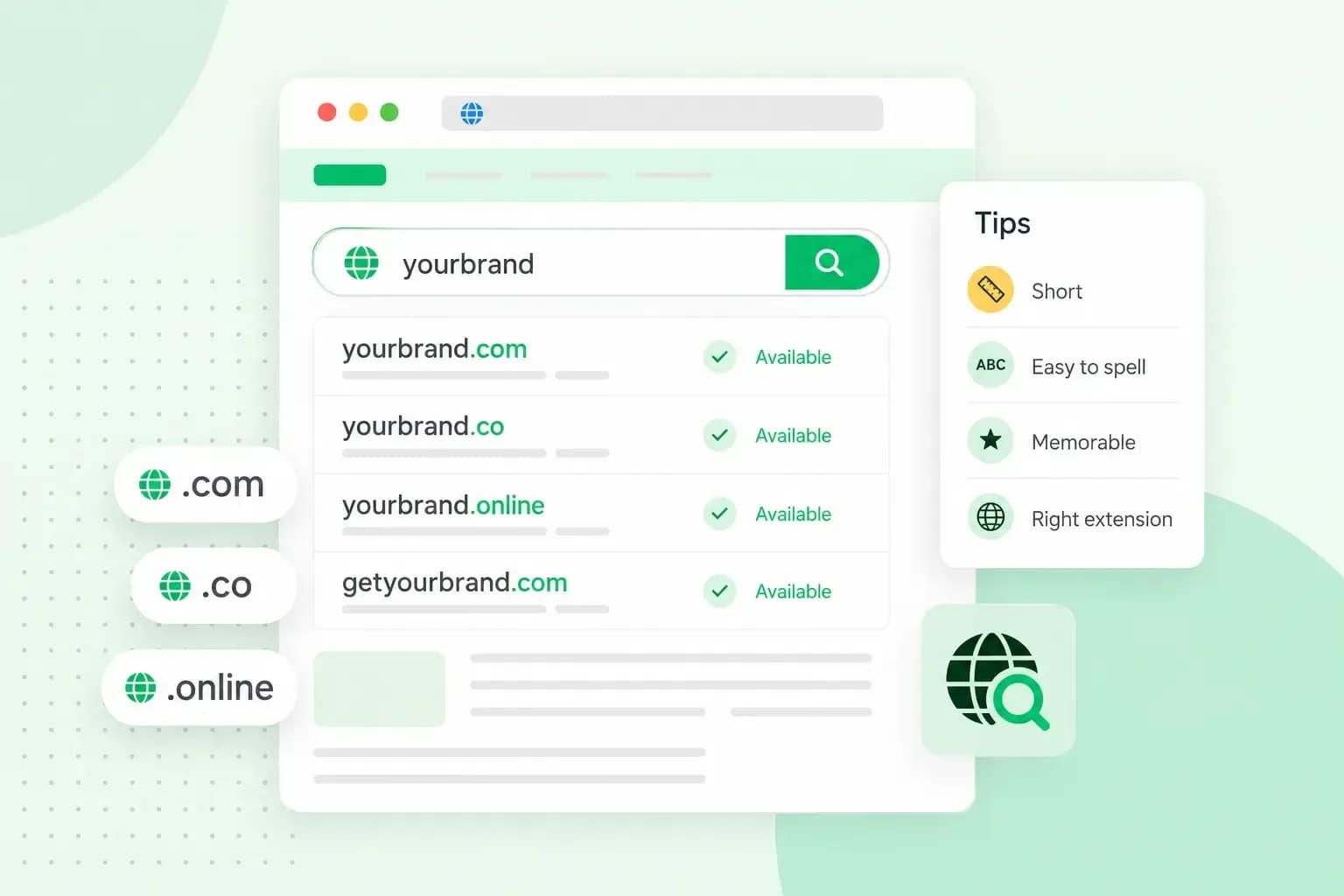
How to choose a domain name
With the abundance of websites on the internet, choosing a domain name can be overwhelming. Continue reading for some tips & tricks on how to pick yours.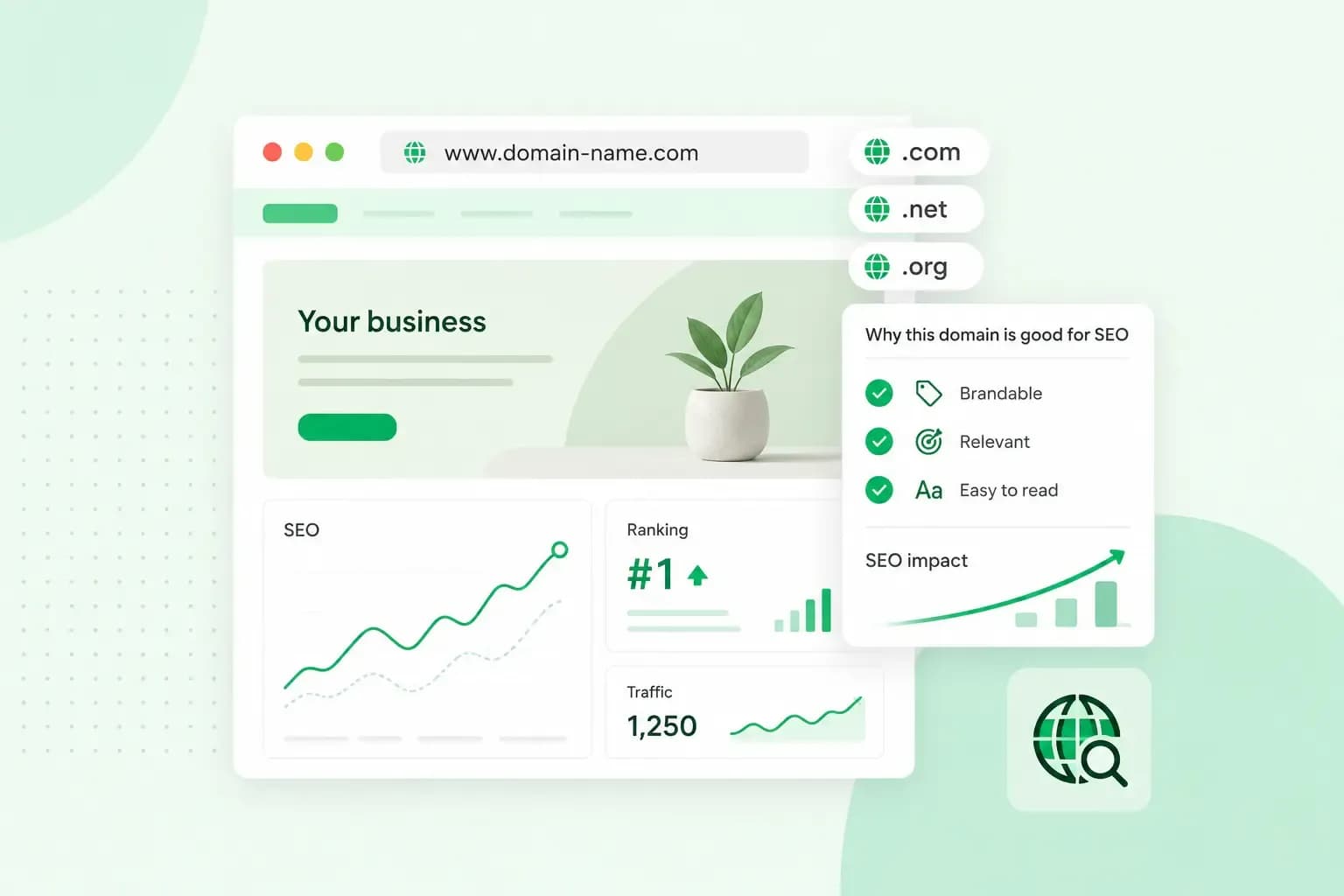 Domain5 Aug 2026
Domain names and SEO: what you should know
Start your website off on the right foot by choosing a domain name that will boost your website’s visibility on search engines.