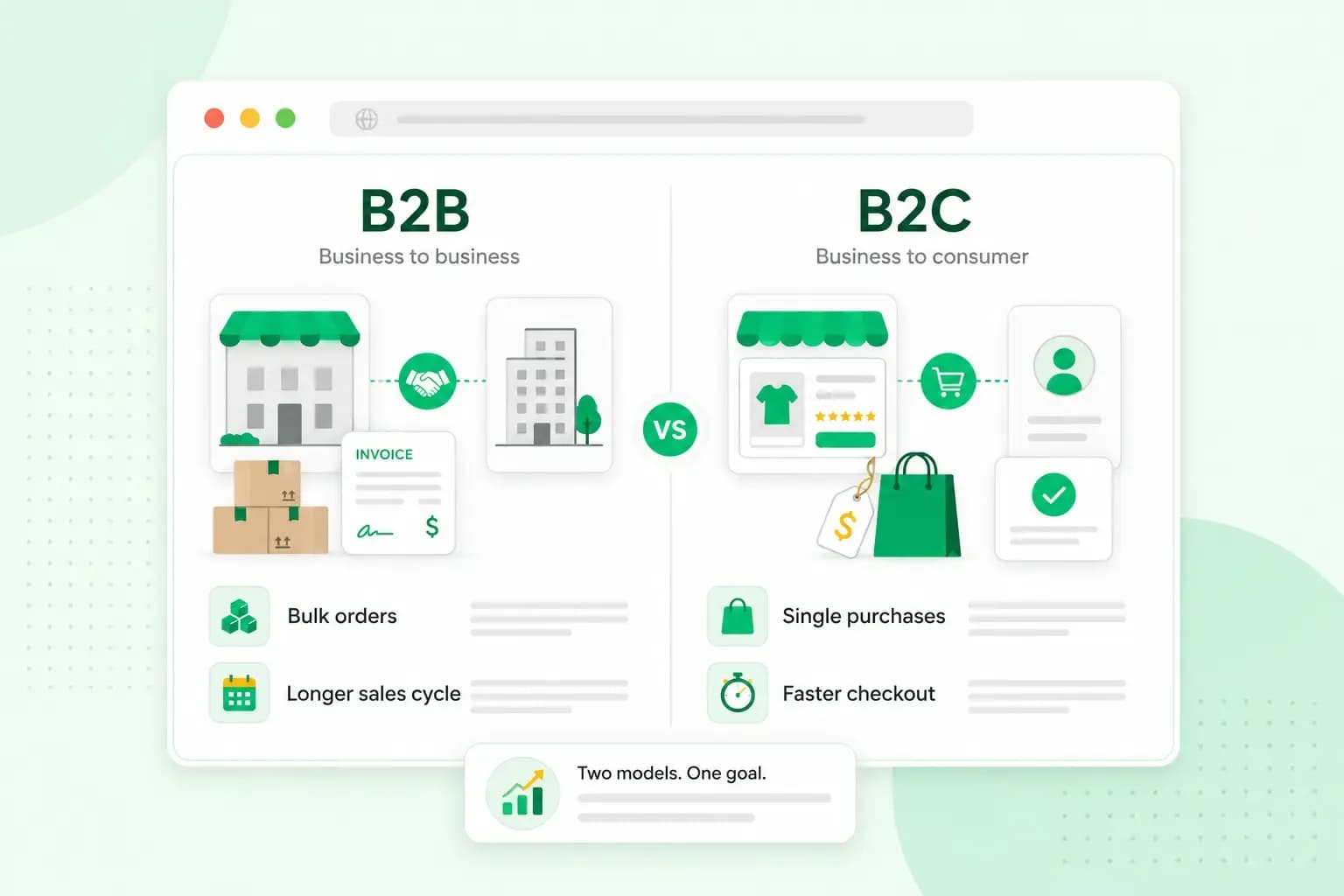
B2B and B2C describe who you sell to. B2B stands for business to business, which means you sell products or services to other businesses. B2C stands for business to consumer: you sell to individual people who buy for their own use.
If your candle studio at yourcandlestudio.co.uk sells a candle to a shopper, that's a B2C sale. If it sells a box of candles to a gift shop to resell, that's B2B. Which side you sell to changes who decides to buy from you, how much they order and how you talk to them.
What does B2B mean?
In a B2B sale, your buyer is a company. It either needs what you sell to run its business, or it sells it on to its own customers. A wholesaler supplying shops, a manufacturer supplying distributors and a company selling software to other businesses are typical examples.
A gift shop that stocks your candles buys them by the box and reorders when its stock runs low. Its orders are larger than a single sale to a shopper, and it reorders more often and more predictably than a shopper would. Before the shop orders, more than one person may have a say, such as the owner and whoever approves the invoice. With more people involved, B2B sales take longer to close, and the relationship counts for more than a quick yes.
What does B2C mean?
In a B2C sale, your buyer is a consumer: an individual buying something for themselves. A high-street shop, a restaurant and an online shop are typical B2C businesses.
When someone orders a single candle from your online shop at yourcandlestudio.co.uk as a present, they're buying as a consumer. Sales like this are smaller, and the shopper can buy on the spot without anyone else's approval.
What is the difference between B2B and B2C?
In B2B, another business buys from you. In B2C, an individual person does. That one difference also shapes how long the relationship with a customer tends to last. Each business buys more at a time, so a B2B seller can grow with fewer, larger deals, where a B2C seller may need thousands of individual sales.
| B2B | B2C | |
|---|---|---|
| Who buys | Another business | An individual person |
| Who decides | Several people, with budget approval | The shopper alone |
| Order size | Larger, higher-value orders | Smaller purchases |
| How long a decision takes | Longer, with several steps | Short |
| The relationship | Long-term, with repeat orders | Usually shorter, built around the product |
How B2B and B2C marketing differ
B2B marketing wins over a small number of business buyers with value and trust, while B2C marketing reaches many shoppers with a quick, clear benefit. Which one you need depends on your target audience, so start by finding out what they need to hear before they buy.
Business buyers tend to make rational, calculated decisions, so B2B marketing is about showing value and building a relationship. It starts with finding shops that might stock your candles, and lead generation attracts their interest and helps turn them into paying customers. Once you're talking, the gift shop wants to know whether your candles will sell to its own customers and what margin it keeps. Answer as an adviser would: ask about the shop's needs before you suggest anything. This is called consultative selling.
B2C marketing reaches more people and speaks to how they feel as much as to what they need. The way shoppers decide what to buy is called consumer behaviour. Purchase decisions range from quick to carefully weighed, and how a shopper buys changes what they need from you:
- Impulse buys: someone sees a product and wants it there and then. Show the product well and keep the checkout quick.
- Considered buys, such as a painting for the living room: people compare before they decide. Give them the details they weigh up, like size, materials and delivery.
- Urgent buys, such as a present someone needs in a hurry: make it easy to find you and order.
When you're writing content, give a business buyer detail and proof, and give a shopper one clear benefit quickly. Don't treat business buyers as faceless companies, though. Write to them in a friendly, plain tone rather than jargon, as you would to any customer. And don't assume that what you sell decides whether you're B2B or B2C. The same candle can go to a shopper, or by the box to a gift shop.
Can a business be both B2B and B2C?
Yes. You don't have to pick one. Your candle studio can sell single candles to people from its website and supply boxes of them to gift shops at the same time.
If you sell both ways, keep the two sides apart where they work differently. Business customers order in larger quantities and expect trade prices and an invoice, while consumers simply pay at the checkout. A separate trade price list, or a page for trade enquiries, keeps your trade terms out of your shoppers' way.
There's also a mixed model called B2B2C, short for business to business to consumer. It extends B2B selling to the end consumer. A business sells through a partner's platform and still builds its own relationship with the shoppers who buy there. If your candle studio sold through an online marketplace, for example, the marketplace would run the platform. Shoppers would still know your brand, and you'd keep in touch with them yourself.
What your website needs for each model
Your website does a different job for each kind of customer. Shoppers usually want to buy quickly, so give them product pages, prices and a checkout they can use without asking you anything first. A candle-making guide sold as a download suits shoppers who want it straight away. When you're selling digital products, the buyer pays and gets an email with a download link, without waiting for you.
Add as many products as you like and take secure payments. We don't take a commission on your sales, though Stripe or PayPal charge their standard payment processing fees.
Open my shopBusiness buyers compare suppliers, and for a large order they may ask for proposals first. Build a website for them that explains what you offer, shows examples of your work and has a contact form for trade enquiries.
Once you know who your first customers are, set up the site that sells to them. If they're gift shops and other businesses, start with that trade website. If they're shoppers buying for themselves, build your online shop and start taking orders for your candles.
Recommended reading
 Marketing19 Oct 2026
15 ideas for Black Friday marketing
Make the most of Black Friday with 15 marketing ideas to attract customers and boost sales. Discover ways to promote your offers, reach more shoppers and make your campaign stand out.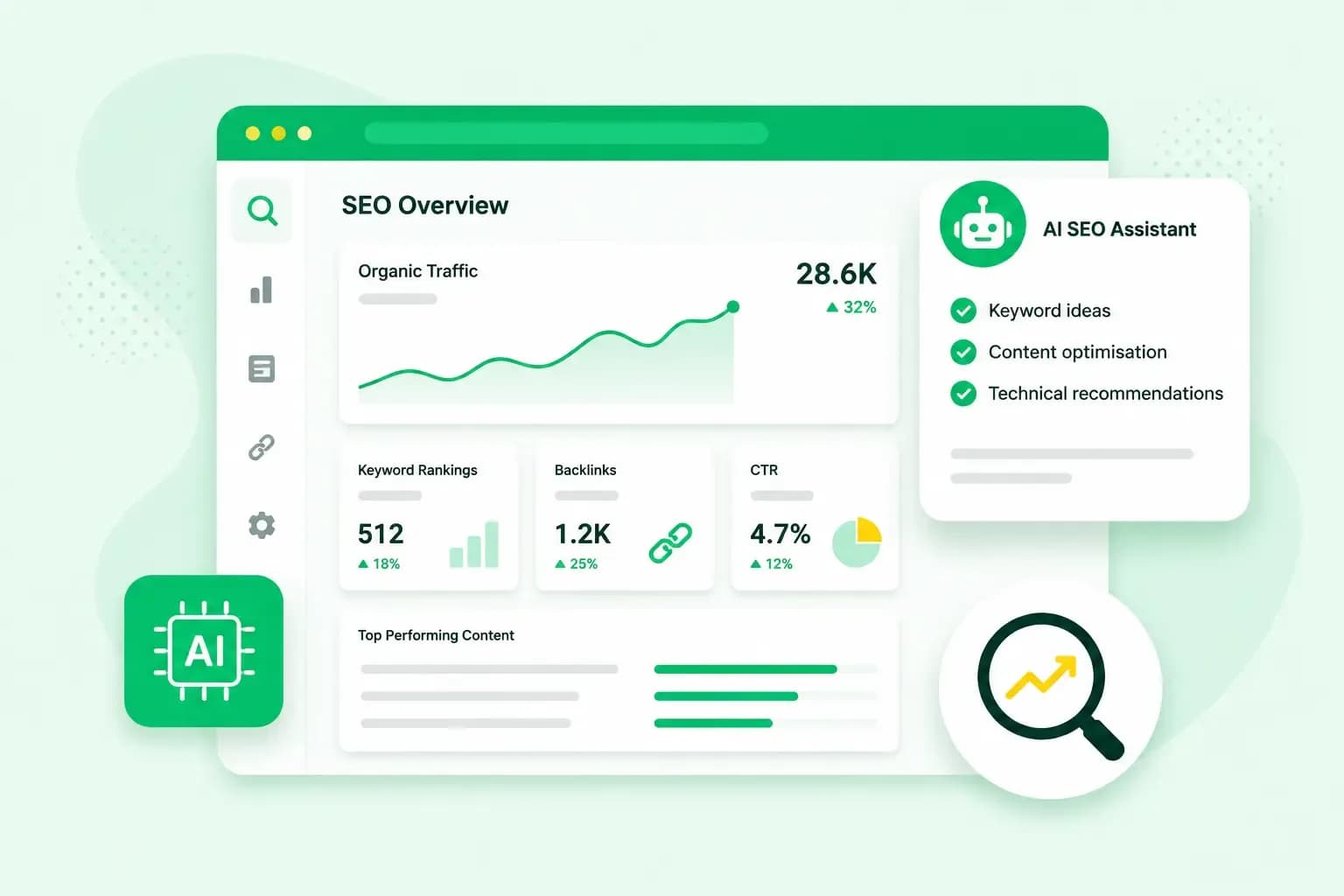 Marketing30 Dec 2025
AI SEO: a guide to search engine optimisation with artificial intelligence
A basic guide to AI in SEO – let's look at how artificial intelligence can help you speed up your SEO tasks. Marketing30 Dec 2025
Make your website visible in AI searches
A basic guide to AI in SEO – let's look at how artificial intelligence can help you speed up your SEO tasks.